Daisy Girl Font: A Versatile Handwritten Style for Creative Projects
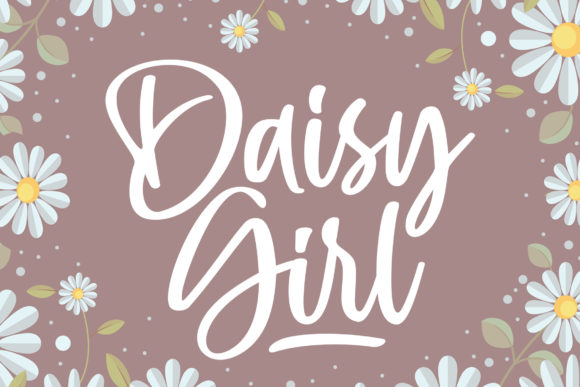
Daisy Girl is a friendly and flowing handwritten font that brings a sense of warmth and personality to any design. Its organic curves and natural feel make it a popular choice among designers looking to add a personal touch to their work. As a PUA encoded font, Daisy Girl offers access to a wide range of glyphs and swashes, giving users greater flexibility in their creative expressions.
What Is Daisy Girl?
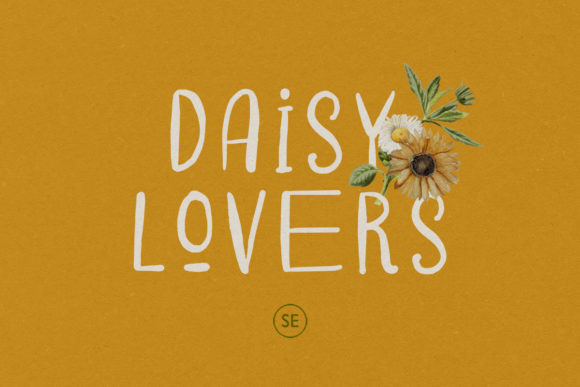
Daisy Girl is a digital typeface designed to mimic the look of handwriting. It features soft, rounded letters and subtle variations in stroke weight that give it an authentic, hand-drawn appearance. The font's character set includes standard letters, numbers, and symbols, along with special glyphs accessible through the PUA (Private Use Area) encoding system. This allows users to easily access alternative characters, ligatures, and stylistic variants without needing additional software or tools.
The font’s name suggests a playful and approachable style, which aligns well with its visual characteristics. Its use of open counters and gentle slopes gives it a relaxed, easygoing feel that can be appealing in various contexts.
Why Consider Using Daisy Girl?
Designers often choose Daisy Girl when they want to convey a sense of informality, creativity, or personalization. Its handwritten appearance makes it ideal for projects such as invitations, greeting cards, blog headers, and social media graphics. The font's versatility allows it to be used in both casual and more formal settings, depending on how it's styled and paired with other elements.
One of the main advantages of using Daisy Girl is its accessibility. Since it is PUA encoded, users can quickly access a variety of stylistic options without needing to install additional fonts or plugins. This makes it a convenient choice for those who need to create unique designs without spending extra time searching for the right character.
Benefits of Daisy Girl
- Personalized Feel: The font’s handwritten style adds a personal touch to text, making it ideal for projects that aim to connect with audiences on an emotional level.
- Easy Customization: With access to a wide range of glyphs and swashes, users can easily customize their text to suit different design needs.
- Wide Applicability: Daisy Girl works well in a variety of design contexts, from digital content to print materials.
- User-Friendly: The font is straightforward to use and integrates well with most design software and platforms.
Potential Tradeoffs and Considerations
While Daisy Girl has many benefits, there are also some considerations to keep in mind. For instance, its informal style may not be suitable for all professional or formal contexts. In situations where clarity and readability are paramount, a more structured or sans-serif font might be a better option.
Additionally, while the font's PUA encoding provides access to a wide range of characters, it may require some familiarity with the encoding system to fully utilize all features. Users who are not accustomed to working with PUA-encoded fonts may need to invest some time in learning how to access and use these characters effectively.
Situations Where Daisy Girl Excels
Daisy Girl is particularly well-suited for projects that benefit from a personal or artistic flair. Some common applications include:
- Creative Branding: Businesses looking to establish a warm, approachable brand identity may find Daisy Girl to be an excellent choice.
- Event Invitations: The font's friendly and flowing style makes it perfect for wedding invitations, birthday cards, and other event-related materials.
- Blog and Website Headers: Designers can use Daisy Girl to create engaging headlines that stand out and capture attention.
- Marketing Materials: From flyers to promotional posters, Daisy Girl can help create a more inviting and visually appealing message.
When to Consider Alternatives
In certain scenarios, it may be worth considering alternative fonts that better suit the project's requirements. For example, if the goal is to create a clean, modern design, a sans-serif font like Helvetica or Arial might be more appropriate. Similarly, for projects requiring high legibility at small sizes, a serif font like Times New Roman could be a better fit.
Designers should also consider the target audience when selecting a font. If the audience prefers a more professional or traditional look, Daisy Girl's casual style may not be the best choice. In such cases, exploring other fonts that match the desired tone and purpose would be advisable.
Practical Insights for Choosing Daisy Girl
When deciding whether to use Daisy Girl, it's important to evaluate the overall design goals and the intended message. Ask yourself: Does this font support the tone I want to convey? Will it be readable across different platforms and sizes? How does it complement the rest of the design elements?
Testing the font in various contexts can also provide valuable insights. Try using it in different color schemes, backgrounds, and layouts to see how it performs. Pay attention to how it looks at different sizes and resolutions, especially if the design will be viewed on multiple devices.
Ultimately, Daisy Girl is a versatile and expressive font that can enhance a wide range of creative projects. However, like any design tool, it should be chosen based on its ability to meet specific needs rather than being selected simply for its aesthetic appeal.